
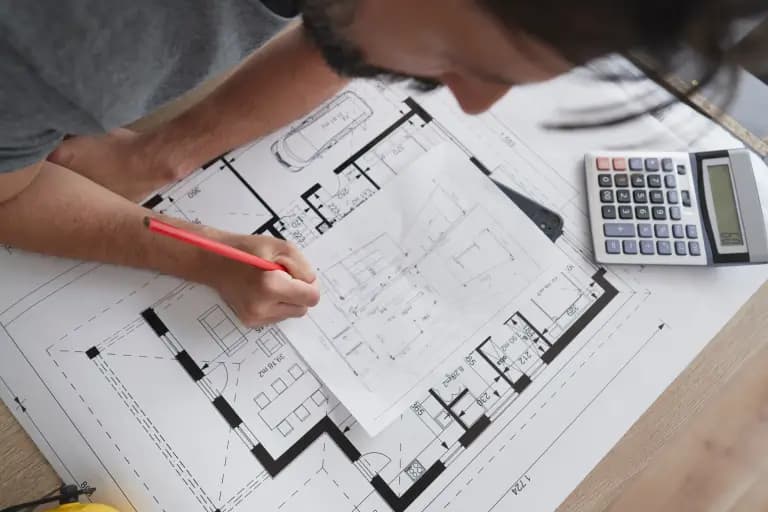
Start with phase autonomy
Every phase has to be code-compliant, occupiable, and useful on its own. That means each phase delivers its own certificate of occupancy, mechanical capacity, and life safety. Phase 1 cannot depend on Phase 2 happening — your congregation has to be able to worship in it for years if the next campaign takes longer than expected.
We design Phase 1 with structural and mechanical headroom for Phase 2. Roof tie-ins are pre-engineered. Future expansion walls are non-load-bearing where possible. The next phase becomes addition, not reconstruction.
Sequence: sanctuary first or fellowship first?
Different congregations have different answers. A church planting from a strip-mall lease often needs the sanctuary first — that's the identity anchor. An established church adding youth ministry might need the youth wing first because the existing sanctuary still works.
We help building committees model both sequences against capital campaign realities (donor timing, pledge fulfillment curves) and against operational realities (where you'll meet during construction).
Document for donors
Building committees need documents they can show donors. Pre-construction budget narratives, phased renderings, real timelines with dates. We deliver these as part of pre-construction so the building committee isn't generating their own.
Hit the dedication date
Easter and Christmas dedications aren't ambitious targets — they're commitments to your congregation. We schedule backwards from the dedication and build buffer for permit and weather variability. The first service in the new space happens when you said it would.
Bottom line
Phased sanctuary construction is its own discipline — different from a single-shot commercial build. Pre-construction modeling that committees can show donors is where good campaigns happen. Free building committee workshop and pre-design feasibility document — no commitment.